
A Course in Modern Alchemy / Volume III
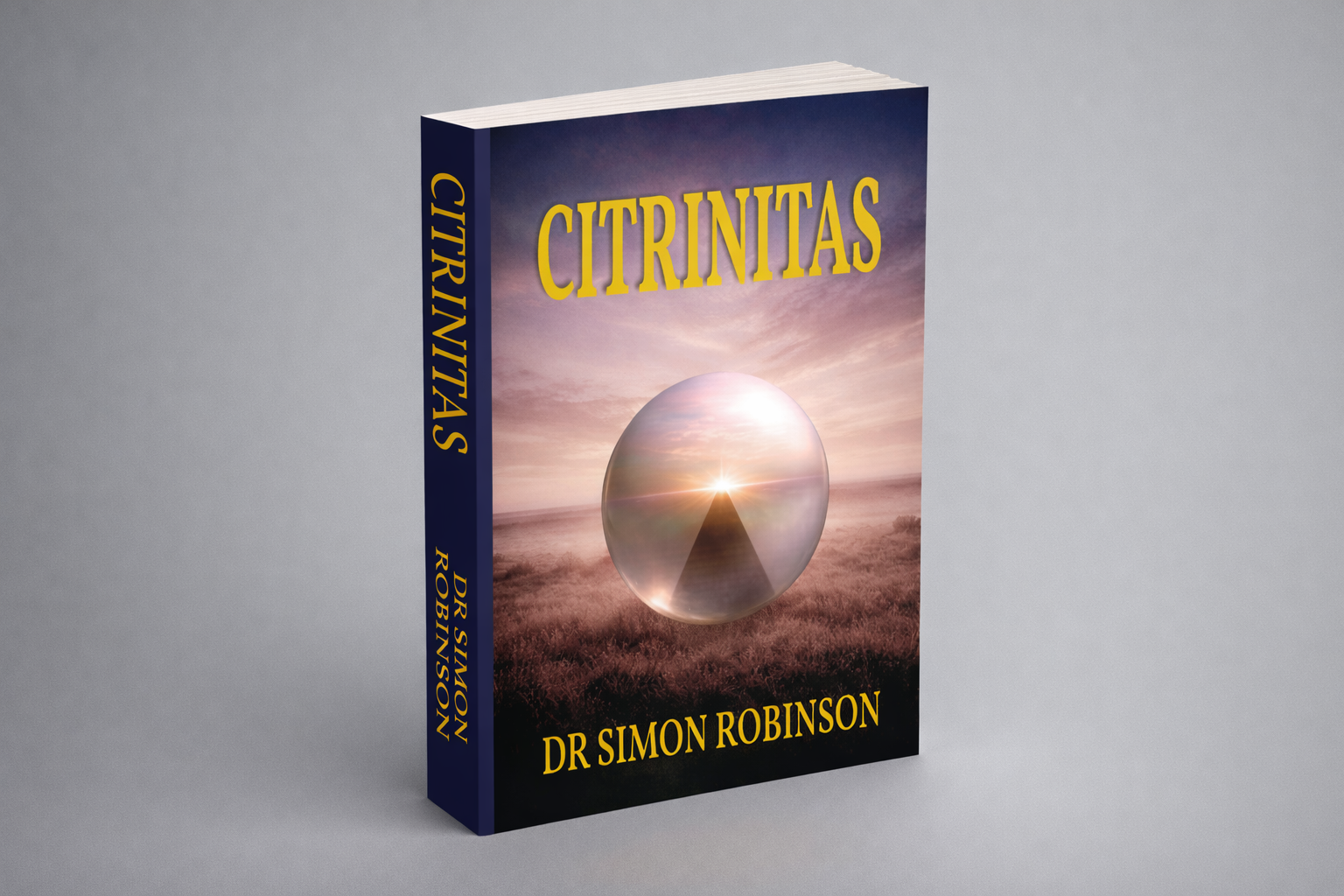
Citrinitas
The yellowing. The maturation of insight.
An enquiry into the observer, the structures of perception, and the subtle ways spiritual understanding becomes something to hold onto.
The third volume of A Course in Modern Alchemy brings alchemical and Hermetic imagery into conversation with Buddhist accounts of emptiness, consciousness and the path of awakening. Across forty-eight chapters, it asks what remains to be examined when the more obvious habits of self have begun to loosen.
48chapters across four sections
60numbered tables
11 pagesof glossary entries
5categories in the thematic index
A reader’s overview
When clarity itself becomes a question
Nigredo begins with the questioning of identity and the encounter with the Shadow. Albedo turns towards clarification, reactive habits and the work of integration. Citrinitas takes up a further question: can even a clear, peaceful or spiritually informed way of being retain an unnoticed centre of ownership?
The book’s recurring images are solar: light, the philosopher’s egg, the peacock, the unveiling of Isis and the dawn. They accompany discussions of the subtle fetters, conceptual proliferation, the division between subject and object, and the difference between an experience and the interpretation built around it.
Its Buddhist material extends from Abhidhamma and insight meditation to Yogācāra, Mahāyāna path structures, Vajrayāna subtle anatomy, Dzogchen and Mahāmudrā. Western material includes the Poimandres, the Magus, Plato’s cave and the language of the Pleroma. These are brought together as a personal map of transformation.
A tension runs through the volume: elaborate maps are offered while their tendency to become new certainties is repeatedly questioned. False Prophets directs scrutiny towards one’s own explanations; The Pathless Path returns to the question of what remains when striving itself is relinquished.
The third volume assumes the first two
The opening cautionary note recommends familiarity with Nigredo and Albedo before serious study of this material. The overview here describes the book’s contents; its advanced practice discussions call for context, stability and appropriate guidance.
The structure of the course
Four sections, forty-eight chapters
Mythos, Dharma, Object and Subject each contain twelve chapters. The sequence moves from symbolic orientation and practice traditions to detailed models of mind, comparative enquiries and the implications of insight for lived experience. Open a section to see its complete contents.
01. Mythos — chapters 1–12
Images and traditions of the solar phase
The philosopher’s egg introduces containment and maturation. Chapters then explore Tögal, mantra, tranquillity and insight, sudden methods, the Heart Sutra and the bardos. The Bodhisattva, the three bodies, the Diamond view and Trekchö broaden the discussion towards emptiness and the relinquishment of attachment to teachings themselves.
- The Philosopher’s Egg p. 43
- Tögal and Rainbows p. 53
- Mantras, Tantras and Deities p. 63
- The Path of Tranquility p. 73
- The Path of Insight p. 83
- Sudden Methods p. 93
- The Heart Sutra p. 101
- The Bardo p. 113
- The Bodhisattva p. 123
- The Three Bodies p. 135
- The Diamond Solvent p. 143
- Trekchö p. 153
02. Dharma — chapters 13–24
The structures of perception and the maps of the path
The analytical section examines the subtle fetters, the six knots, winds and channels, bindus and chakras, and papañca. It distinguishes afflictive from cognitive obstructions, then develops the perfections, the ten bhūmis and the five paths. The film projector and the veil provide recurring metaphors for different layers of interpretation.
- Dismantling the Subtle Fetters p. 165
- The Six Knots p. 177
- The Winds and Channels p. 185
- The Bindus and Chakras p. 197
- Papañca p. 209
- Afflictive and Cognitive Obstructions p. 221
- The Treasury of Precious Jewels p. 229
- The Perfections p. 237
- The Metaphor of the Film Projector p. 249
- The Veil of Isis p. 257
- Returning to Saṃsāra p. 265
- Five Paths p. 273
03. Object — chapters 25–36
Hermetic images and the problem of the observer
Poimandres opens a section that moves through solipsism, the Magus, false certainty and the transmutation of suffering. On Having No Head and Plato’s cave bring the observer into question; Wu Wei, Vastness, Beyond Duality and The Sound of Silence consider experience as effort and conceptual division loosen.
- Poimandres p. 295
- Solipsism p. 307
- The Magus p. 315
- False Prophets p. 325
- The Transmutation of Suffering p. 335
- On Having No Head p. 345
- The Allegory of the Cave p. 357
- Wu Wei p. 365
- Vastness p. 373
- Beyond Duality p. 381
- The Sound of Silence p. 391
- The Ground p. 401
04. Subject — chapters 37–48
Fullness, ordinary humanity and letting go
The final section turns to the Pleroma, the persistence of human characteristics, sameness and the other shore. Later chapters explore sorrow, purpose, arahantship and the meaning of Citrinitas itself. The Pathless Path closes the volume while looking towards the return and embodiment associated with Rubedo.
- The Pleroma p. 411
- Warts and All p. 421
- The Edge of Reality p. 431
- Sameness p. 439
- The Other Shore p. 447
- Letting Go p. 455
- The Last Sorrow p. 463
- The End of Saṃsāra p. 473
- Love, Faith and Purpose p. 481
- The Arahant p. 489
- Citrinitas p. 497
- The Pathless Path p. 505
Page references follow the Revised Edition (2026). The printed contents also list many internal chapter headings, providing a more detailed route into individual discussions.
Orientation and reflection
Study guides that connect the three volumes
Before the main chapters, The Vision of Hermes presents selections from the Poimandres on pages 23–25. A summary of Albedo begins on page 27, followed by How to Use Citrinitas on pages 37–38. These opening sections establish continuity with the earlier work and explain the change of emphasis.
The chapter study guides gather key concepts, useful terms, essential distinctions and clarifying questions. Some also provide direct enquiries and revision material. Lists of foundational chapters point back to Nigredo and Albedo, making the new volume part of a cumulative course rather than an isolated collection of ideas.
Distinctions before conclusions
The guides return to differences that are easy to blur: spiritual aspiration and attachment, emptiness and nihilism, observation and interpretation, and a practical method and an identity built around that method.
Connections across the course
Foundational chapter lists help readers recover an earlier discussion before approaching its development here. The study apparatus encourages movement between books as well as progress through the current volume.
An example: The Philosopher’s Egg
The opening chapter’s guide, on pages 50–52, considers the hope for spiritual reward and the narrative of progress. It introduces a direct enquiry into the assumed doer of ordinary actions, then lists relevant chapters on the fetters, the Moon, the white stone and transcendental consciousness from the earlier volumes.
The structure shows the intended reading rhythm: examine an idea, clarify its terms, consider its experiential implications and revisit its foundations.
The comparative and technical material
Sixty numbered tables, with further appendix references
A Table of Tables on pages 525–527 lists sixty numbered tables from the main text. Their scope ranges from the fetters and meditation factors to subtle anatomy, Hermetic imagery, layers of perception and comparisons between approaches to awakening.
| Area | What the book includes | Where to look |
|---|---|---|
| Stages and approaches | The ten fetters; a comparison of the first three alchemical stages; the four visions of Tögal; jhāna factors; modes of awakening. | pp. 47, 49, 57, 77, 99 |
| Buddhist frameworks | The five aggregates, six bardos, four immeasurables, ten bhūmis and three bodies of the Buddha. | pp. 105, 119, 129, 131, 137 |
| Mind and subtle anatomy | The eight consciousnesses; Tibetan elements and functions; three main channels; chakra and seed-syllable tables; the mechanism of papañca. | pp. 178, 192, 201–205, 213 |
| Obstructions and development | Hierarchies of purification and veils; the five paths; twenty-two similes of bodhicitta; sixteen moments of the path of seeing; a register of the bhūmis. | pp. 223, 233, 251, 277, 282, 286 |
| Hermetic and philosophical comparisons | The soul’s ascent through the planetary zones; internal models and simulation; the false prophet and the alchemist; peacock symbolism; Plato’s cave. | pp. 301, 318–319, 330, 340, 361 |
| Perception and integration | Mental factors and volition; sensory approaches to non-dual meditation; layers of awareness; empathy; the logic of emptiness; the four yogas of Mahāmudrā. | pp. 367, 394, 405, 424–425, 449, 509 |
The tables combine inherited classifications with the author’s interpretations. Their correspondences and numerical schemes belong to those frameworks; they are not measurements establishing the same structures in modern physics or neuroscience.
The additional reference tables — pp. 517–524
- Cetasikas by Way of Citta, pp. 517–521. The 52 mental factors are grouped as seven universals, six occasionals, fourteen unwholesome factors and twenty-five beautiful factors. The accompanying material discusses their distribution across types of consciousness.
- The 28 Types of Matter, pp. 522–523. The four great elements and twenty-four derived forms are organised into reference tables within the book’s Abhidhamma account.
- The 8 Consciousnesses, p. 524. A Yogācāra-based table sets out the sense consciousnesses, conceptual mind, manas and storehouse consciousness, using contemporary analogies to explain their proposed roles.
Questions that run through the volume
Light, language and the observer
How does a world become a story?
Papañca examines conceptual proliferation and discusses the Madhupiṇḍika Sutta. Later, The Sound of Silence returns to hearing, language and the way a sound becomes a word carrying remembered meaning.
What does the projector metaphor reveal?
The light source, lens, film and projected story become a way to distinguish layers in the book’s account of experience. The metaphor invites attention to how perception is organised, rather than only to the narrative appearing on the screen.
Can a teaching become another obstacle?
The Diamond material and False Prophets examine attachment to explanation and spiritual authority. The latter applies its enquiry to the author’s own words, emphasising the provisional relevance of a personal account.
What happens to care and purpose?
The Bodhisattva chapters, the peacock imagery and Love, Faith and Purpose connect the discussion of emptiness with compassion. The book repeatedly returns to how wisdom relates to participation in a shared world.
The visual language
Gold accents, symbolic medallions and reference pages
The supplied edition uses a predominantly white interior with gold and orange headings, decorative opening letters and circular symbolic illustrations. The chapter openings create a recognisable visual rhythm while giving each subject a distinct image.
The Philosopher’s Egg opens with an egg-like golden form. The Bindus and Chakras uses an image of an illuminated interior axis, while The Metaphor of the Film Projector introduces its argument with a projector and a beam of light. These images provide visual points of entry into the chapter’s language.
Tables and study guides give the more technical passages a different structure. At the back, glossary entries appear as substantial explanatory paragraphs, bringing definitions, symbolic associations and references together.
The edition credits the author with design and typography and acknowledges AI assistance with images, some editorial work and study-guide formatting. It also notes that certain classical texts, including the Poimandres and the Heart Sūtra, have been newly rendered with AI assistance under the author’s supervision. Those renderings should be approached as part of this edition’s interpretive presentation.
Finding a term, following an idea
A glossary and two complementary indexes
The glossary on pages 529–539 offers more than short definitions. Entries combine language origins, extended explanations and alchemical associations, often adding a subject class and references to chapters in this or earlier volumes. Terms such as ālayavijñāna, bodhicitta, bindu, papañca, Pleroma and Trikāya are situated within the book’s own synthesis.
A separate Categorical Index on pages 540–541 groups vocabulary under five headings. It provides a way to browse a family of related concepts before returning to their fuller descriptions.
I. The upper fetters
Craving for form and formless existence, conceit, restlessness and ignorance: the five subtle bonds central to this volume’s enquiry.
II. The architecture of mind
Storehouse consciousness, mental factors, cognitive and afflictive obscurations, manas, conceptual proliferation, wisdom and the internal model.
III. Hermetic and Gnostic mythos
The philosopher’s egg, the peacock’s tail, the Demiurge, gnosis, Logos, Nous, the Ogdoad, Pleroma, Poimandres and the planetary zones.
IV. Vehicles of awakening
The bhūmis, bodhicitta, Bodhisattva, Heart Sutra, perfections, Buddha-nature and the three bodies.
V. Subtle body and practice
Drops, winds and channels; Mahāmudrā, cessation, rainbow body, rigpa, Tögal, Trekchö, vajra and the vajra body.
The alphabetical index
Pages 543–552 supply a separate index of terms, people, texts and topics with page references. This supports returning to a particular discussion after browsing the broader categories.
The categories above follow the book. The glossary explains its terminology within the author’s framework; it does not replace the distinct definitions and usages found in each source tradition.
Approach and perspective
Reading Citrinitas
This is the most overtly advanced of the first three volumes. It assumes the earlier course vocabulary and brings several further systems into play. A reader can expect unfamiliar terms, paradoxical arguments and comparisons that require time to consider.
The opening recap of Albedo is a useful starting point, followed by the guidance on using the book. Working through the four sections in order gives the cumulative argument room to develop; the foundational chapter lists provide a route back when an earlier concept needs refreshing.
The book frequently uses the language of mechanics, engineering and physics. This is part of its explanatory style and its proposed correspondences between traditions. Subtle-body descriptions, claims about light and interpretations of altered perception need to remain distinguishable from established anatomical or physical findings.
The question of how to read the maps is part of the book itself. Its discussions of spiritual materialism, false certainty and attachment to emptiness invite a reader to question the interpretive framework as well as use it.
Context for the advanced practice material
The cautionary note on page 5 and reading guidance on pages 37–38 explicitly address the potentially destabilising character of the material. The book includes discussion of subtle-energy practices, intense contemplative experiences and the dismantling of familiar accounts of identity.
These passages are best approached within their traditional and practical contexts, with qualified guidance where relevant. This overview is not a practice sequence, and neither unusual perceptions nor distress should be treated as proof of spiritual attainment. The book is intended for education and contemplation, rather than clinical treatment.
Continue exploring
The book and the online course
The Citrinitas course pages offer another route into the material. You can also browse practical resources, media and course material, or return to the complete course overview.
The transition towards Rubedo
The final chapter explicitly leaves the work open. Citrinitas closes with the imagery of illumination and the pathless path; Rubedo is introduced as the further question of how that understanding becomes embodied in life. This is the third volume, rather than the conclusion of the four-part course.
Edition and availability
Book details
Citrinitas: Part Three of A Course in Modern Alchemy
Dr Simon Robinson · Revised Edition (2026)
ISBN: 978-1-918532-05-0
The links below lead to bookseller listings or ISBN searches. Check the retailer for current format, price, delivery and availability. The ISBN can also be used when enquiring at an independent bookshop.